
Pet Wellbeing7 min read
Still Smelly After a Bath: Where the Odour Actually Comes From
A smell that survives a bath usually isn't the shampoo's fault. The most common cause is a coat that never dried down to the skin; the next is shampoo that wasn't fully rinsed out. If it's dry and properly rinsed and the smell is still there, track it to the ears, skin, mouth or rear — and have a vet look.
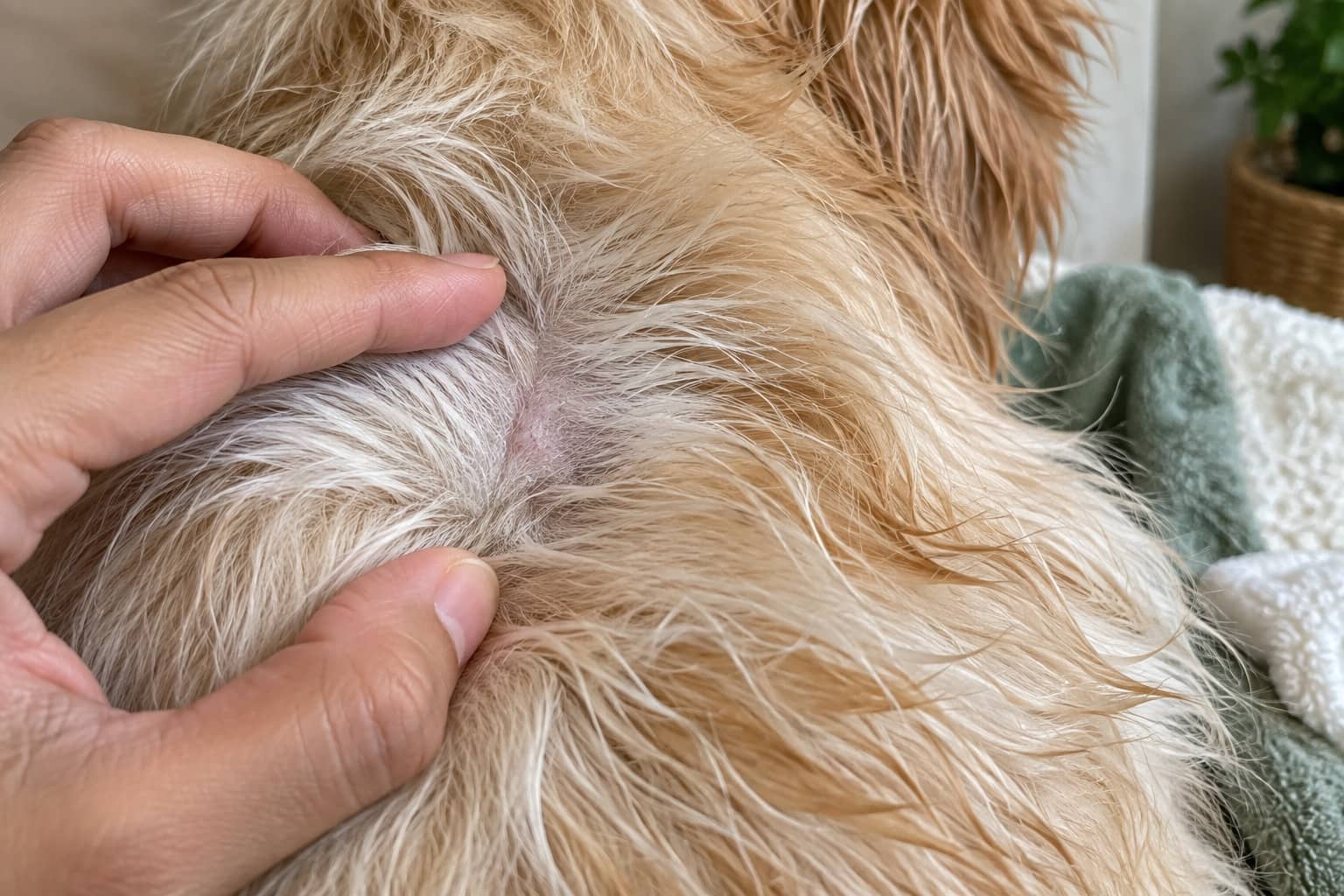
A smell that survives a bath usually isn't the shampoo's fault. The most common cause is a coat that never dried down to the skin; the next is shampoo that wasn't fully rinsed out. If it's dry and properly rinsed and the smell is still there, track it to the ears, skin, mouth or rear — and have a vet look.
Bathed on Saturday, and by Tuesday the room smells again
That complaint turns up over and over in owner forums, and the reply is nearly always the same: change your shampoo.
That answer is right in one case out of five.
A smell that comes back fast has five possible sources. Here they are in order of how common they are. The first two you fix at home. The other three end at a clinic.
One: the coat never dried to the skin
This is the single most common cause, and double-coated dogs are where it bites hardest.
The outer coat dries fast enough to fool your hand. You run your palm over him, it feels dry, you switch the dryer off — and the undercoat is still wet. Moisture sitting against skin like that turns musty inside a day or two.
The smell has a signature: laundry folded away before it finished drying. It doesn't smell like an animal.
To check, part the fur with your fingers down to the skin in three or four places — back of the neck, belly, base of the tail. If the roots feel cool and damp, you aren't finished.
The three slowest places are the belly, the armpits and between the toes. Give those an extra pass every time and this problem simply stops happening.
Two: the shampoo didn't fully rinse out
Common with thick coats, and with anyone who pours shampoo straight from the bottle.
Residue at the base of the hair collects dust and turns stale within a few days. Some dogs start scratching along with it.
The fix is easy. Rinse for twice as long as feels sufficient, and mix the shampoo with water in a jug before it goes anywhere near him. Diluted lather rinses out far more readily.
A shampoo that rinses cleanly genuinely helps here. The Green Tea 500 ml is made to lather softly and rinse out easily, and the scent is a light, clean green tea — nothing sweet. It's deliberately kept quiet, so it doesn't sit on top of his own smell and hide a change you'd want to notice.
Three: the ears
If you've fixed the first two and the smell is still there, start smelling one place at a time. Begin with the ears.
Ear odour is easy to recognise — sweetish and sour, obvious the moment your nose gets close. It usually arrives with head-shaking, ear-scratching, or a flap that looks redder inside than it should.
Floppy-eared dogs get this more than anyone, because the flap closes over an opening that's already warm and damp.
This is not a shampoo's job, and it isn't a job to attempt at home either. See a vet.
Four: the skin
Skin odour tends to be musty and slightly greasy, and it's strongest at the back of the neck and under the belly.
Part the coat and you'll usually find something — redness, flaking, scabbing, or skin oilier than it ought to be. Sometimes a spot that makes him flinch.
That smell means something is happening on the skin. It isn't a cleanliness problem. A gentle shampoo can keep things from getting worse, but it doesn't address the cause. See a vet.
Five: the anal glands
Nobody wants to name this one out loud, so here it is.
Anal gland odour is strong and fishy, and it doesn't smell like anything else. It usually comes with scooting along the floor, or an unusual amount of attention paid to the base of the tail.
If that's what you're seeing, it's a vet appointment. No number of baths will touch it.
The honest summary
Of the five, a shampoo handles the first two. Three through five end at a clinic.
Anyone telling you one bottle solves every kind of pet odour is selling you something.
Between baths, a dry shampoo foam works well on localised smells — paws, belly, around the mouth, which is where it always returns first. But if the source is one of the last three, foam isn't the answer either.
The thing worth doing after every bath
Smell him while he's freshly clean. Back of the neck, ear flaps, around the mouth.
Learn what normal smells like, and next week you'll catch a change before it becomes anything. Owners who catch ear trouble early nearly always catch it by nose rather than by eye.
The five minutes after a bath covers that step in full, drying properly has its own piece, and if he's getting on in years and his smell has shifted, the quiet signs of ageing may explain it.
Your nose is the best instrument you own. Use it before you go looking for a new bottle.
Questions people ask us
- Why does he smell again a few days after a bath?
- Most often the coat never dried to the skin on bath day. Moisture held against skin turns musty within a day or two. Second most often, shampoo wasn't fully rinsed out. Fix those two first — if the smell survives both, it isn't coming from the coat at all.
- What makes a dog's ears smell?
- Ear odour has its own signature — sweetish and sour, obvious as soon as you put your nose close. It usually travels with head-shaking, ear-scratching, or redness inside the flap. Floppy-eared dogs get it more, because the flap closes over an opening that's already warm and damp. This isn't a shampoo's job. See a vet.
- How do I get rid of dog odour?
- Find out where it's coming from before you buy anything. Smell one place at a time: the back of the neck, the ear flaps, around the mouth, and the base of the tail. An all-over smell is usually a damp coat or leftover shampoo, and you can fix that at home. A smell concentrated in one spot is a vet's problem, not a new bottle's.
- Will switching shampoo make the smell go away?
- Only if the cause was the old shampoo being hard to rinse out and leaving residue behind. If the source is the ears, the skin, the mouth or the anal glands, no number of bottles will change it — a shampoo only ever works on the coat and the outer skin.
Read next
 How Often Is Often Enough — and Why Dogs and Cats DifferOnce a week suits most dogs in a Thai home. An indoor cat can go far longer, or never. The right number depends on the coat, the weather and where he sleeps — and if the shampoo is gentle, more often does no harm. Red or flaky skin is the one sign to stop and see a vet.
 The First Bath: When, and How to Make It UneventfulA puppy or kitten is ready for a first bath when the vet says so, because the timing follows his own vaccination schedule. Until then, a warm cloth wrung out almost dry keeps him perfectly clean.
 Human Shampoo on a Dog? Dog Shampoo on a Cat?Human shampoo isn't built for a pet's skin. Once, in a pinch, is not a disaster — but it shouldn't become the habit. Dog shampoo on a cat is the riskier of the two, because a cat licks everything back off himself afterwards and swallows whatever was left in the coat.