
Pet Wellbeing6 min read
5 Quiet Signs Your Pet Is Getting Older
Greying around the muzzle. Sleeping a little longer. A pause before the sofa. The small changes we miss when we're busy, and what they usually mean.
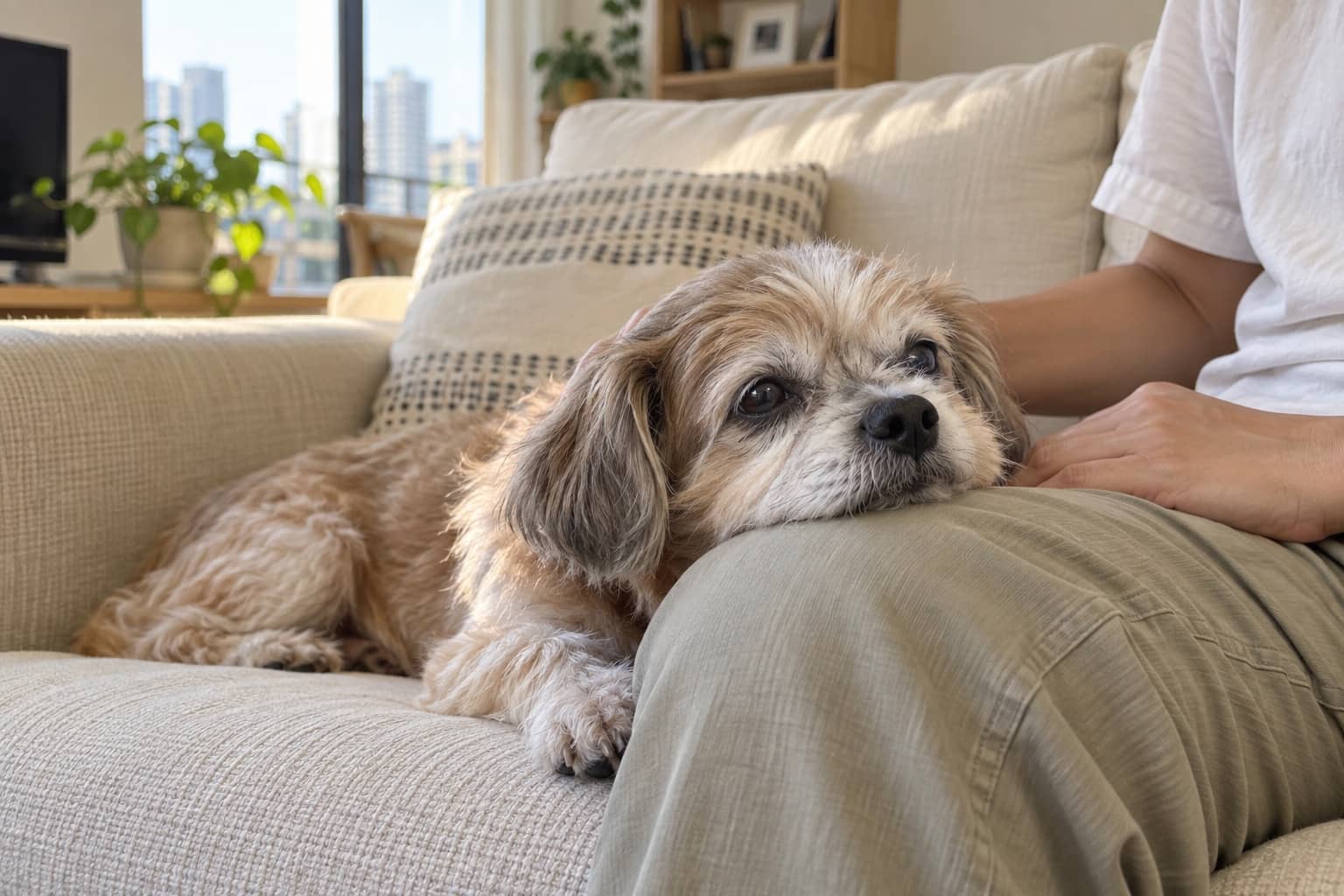
The changes rarely announce themselves. They arrive a little at a time, small enough that you don't register them, until someone who hasn't seen your dog in a year says "he's gone grey, hasn't he" and you realise you'd stopped noticing.
What follows is the list customers describe to us in hindsight, usually starting with "actually, now I think about it, it started way before that."
1. The muzzle starts going pale
The easiest one to spot, and the only one here that's nothing to worry about. Grey around the mouth and eyebrows is ordinary. Some dogs start at five.
What's worth watching alongside it is the coat itself. Thinning in patches, or fur that's got noticeably coarse despite the same care, isn't just age. That one's worth a vet's opinion.
2. She sleeps longer, but not as deeply
Older animals sleeping more is expected. What people miss is the quality of it.
Is she changing position more often? Getting up in the night to circle and resettle? Choosing a hard floor over the soft bed she's always used? Those usually point at joints or general discomfort rather than tiredness.
3. A pause before jumping
This is clearest in cats. A cat who used to land on the counter in one motion starts looking up first, or starts using a chair as a halfway step.
Dogs do the same thing — slower on the stairs, a beat of hesitation before the sofa, a moment standing still after getting out of the car.
The pause is the part to remember. It isn't that he can't. It's that he thinks about it first.
4. He smells sooner than he used to
We hear this one constantly, and the shampoo usually gets the blame.
What's actually happening is that an older animal grooms less of himself. A cat who can't reach her lower back and tail base develops a greasy patch exactly there. A dog with sore hips stops washing his own feet.
If the smell is coming back faster on the same bathing schedule, find out where it's coming from. If it's a spot he can't reach, that's your answer — and the fix isn't more baths, it's wiping that area with a dry shampoo foam between them.
If the smell is coming from his mouth or ears, or it's oddly sweet, that's a vet visit rather than a grooming problem.
5. He's slower to greet you
Not because he cares less. Hearing and eyesight both fade, and plenty of older pets simply don't register that you're home as quickly as they used to.
Watch whether she startles when you approach from behind. If she does, she isn't hearing you coming. From then on, approach from the front and touch her gently before doing anything else.
What to do once you're seeing these
First, don't panic. Most of this is ordinary ageing, not illness.
Second, write it down. The date, and what you saw. At the vet, "he seems slower" is worth much less than "since the middle of last month he's been hesitating before getting on the sofa."
Third, adjust small things at home. A non-slip mat on tiled floors. A bed that's easier to get out of. A second water bowl somewhere else in the house.
And last, give him a bit more of your time. This brand exists because of a pomeranian called Lava, and because of how her owner felt afterwards. Half an hour a week is a place to start.
Questions people ask us
- When does a dog or cat count as senior?
- It varies by size and breed — large dogs age into it earlier than small ones. More useful than a number is comparing your pet to how she was a year ago.
- Should I change shampoo for an older pet?
- Not if the skin is fine. If it's getting dry or thin, a low-fragrance hypoallergenic formula tends to sit better, and stretching the gap between baths helps too.
- He won't tolerate baths the way he used to. What now?
- It's usually joints and balance rather than mood. Put down a non-slip mat, keep the session short, or switch to spot-cleaning with a dry shampoo foam on weeks when he isn't up to it.
- What should send me to a vet straight away?
- Weight loss without a diet change, drinking much more than usual, laboured breathing, a lump that's growing quickly, or a leg that suddenly drags. Don't wait those out.
Read next
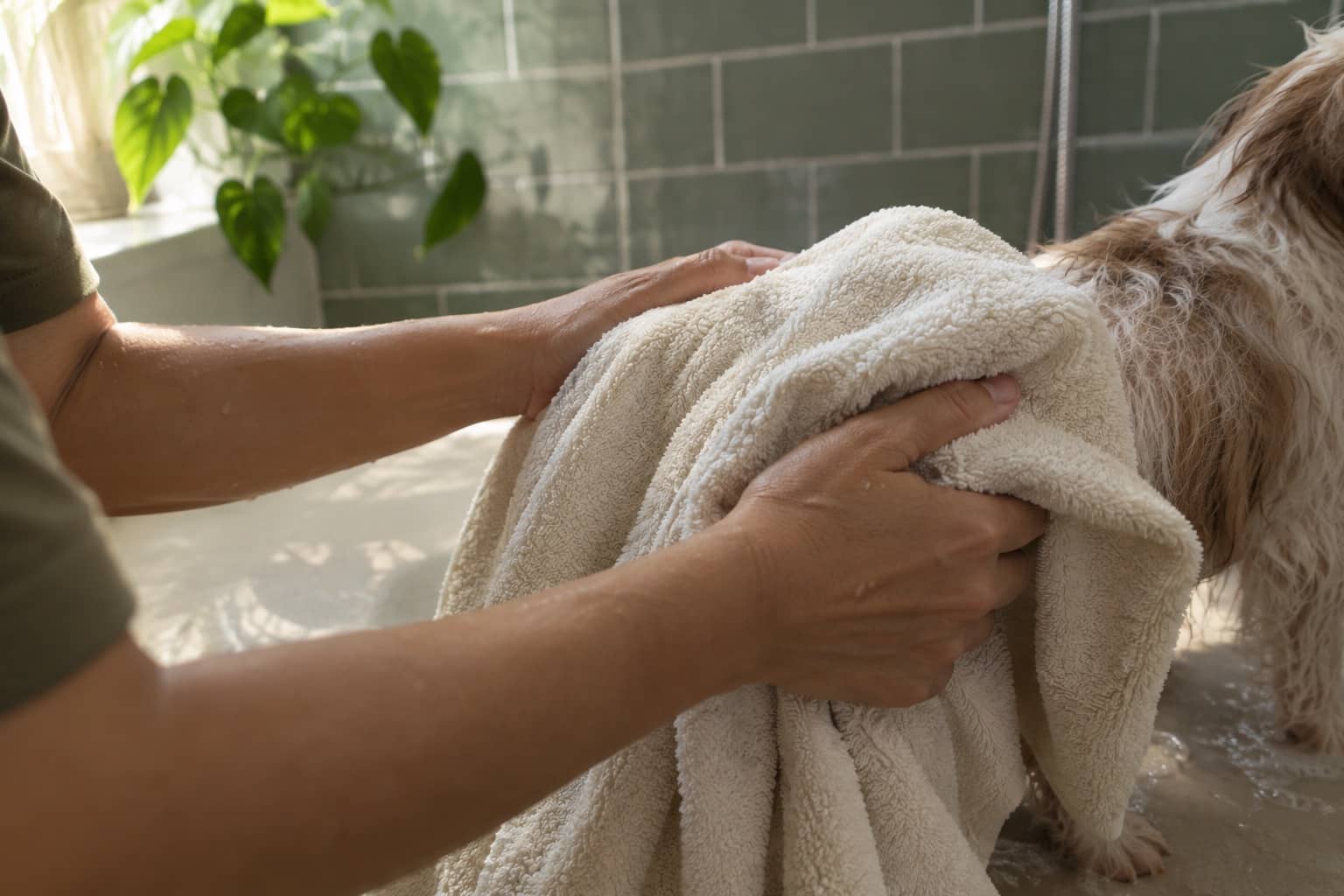 How Often Is Often Enough — and Why Dogs and Cats DifferOnce a week suits most dogs in a Thai home. An indoor cat can go far longer, or never. The right number depends on the coat, the weather and where he sleeps — and if the shampoo is gentle, more often does no harm. Red or flaky skin is the one sign to stop and see a vet.
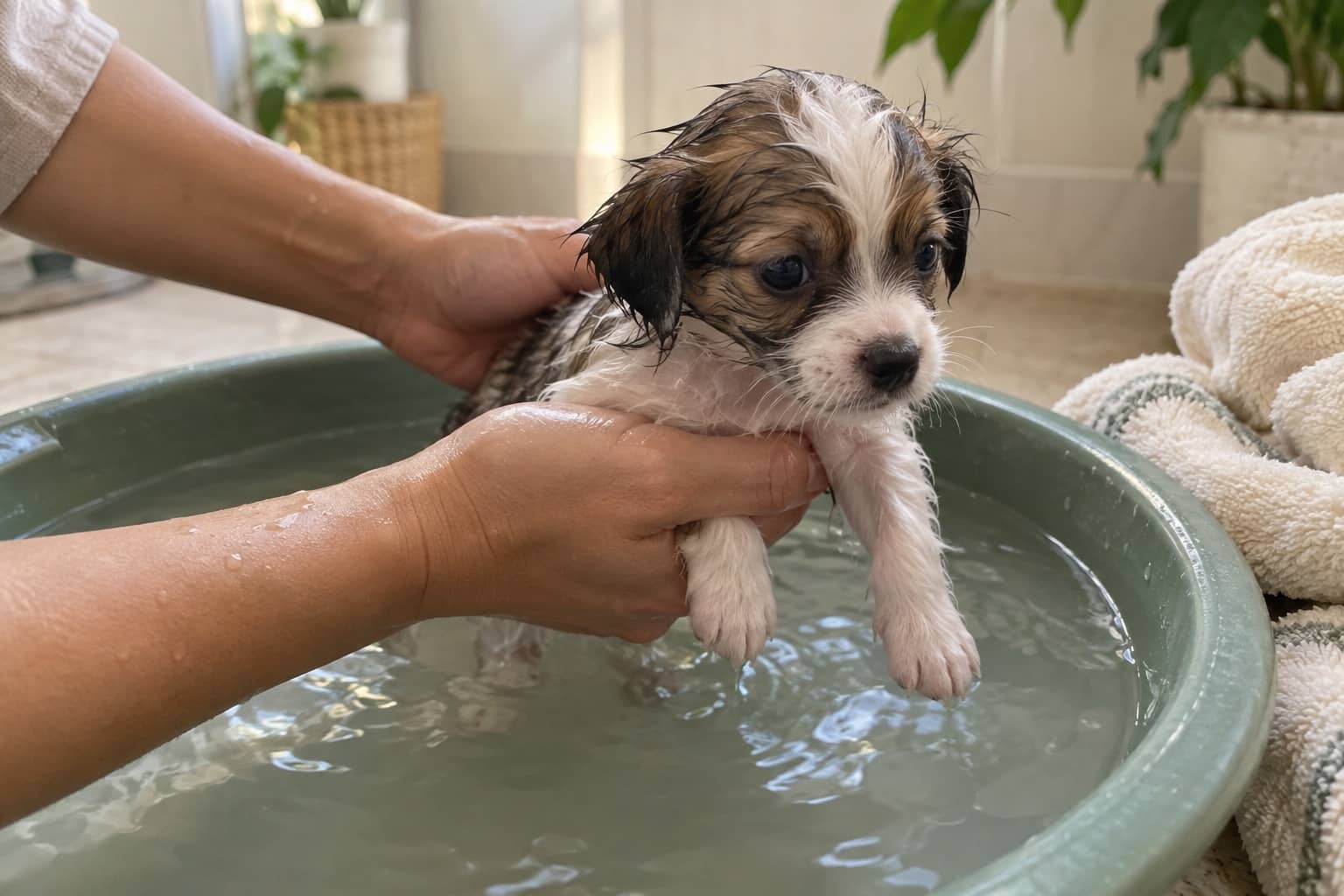 The First Bath: When, and How to Make It UneventfulA puppy or kitten is ready for a first bath when the vet says so, because the timing follows his own vaccination schedule. Until then, a warm cloth wrung out almost dry keeps him perfectly clean.
 Human Shampoo on a Dog? Dog Shampoo on a Cat?Human shampoo isn't built for a pet's skin. Once, in a pinch, is not a disaster — but it shouldn't become the habit. Dog shampoo on a cat is the riskier of the two, because a cat licks everything back off himself afterwards and swallows whatever was left in the coat.