
How To6 min read
The First Bath: When, and How to Make It Uneventful
A puppy or kitten is ready for a first bath when the vet says so, because the timing follows his own vaccination schedule. Until then, a warm cloth wrung out almost dry keeps him perfectly clean.
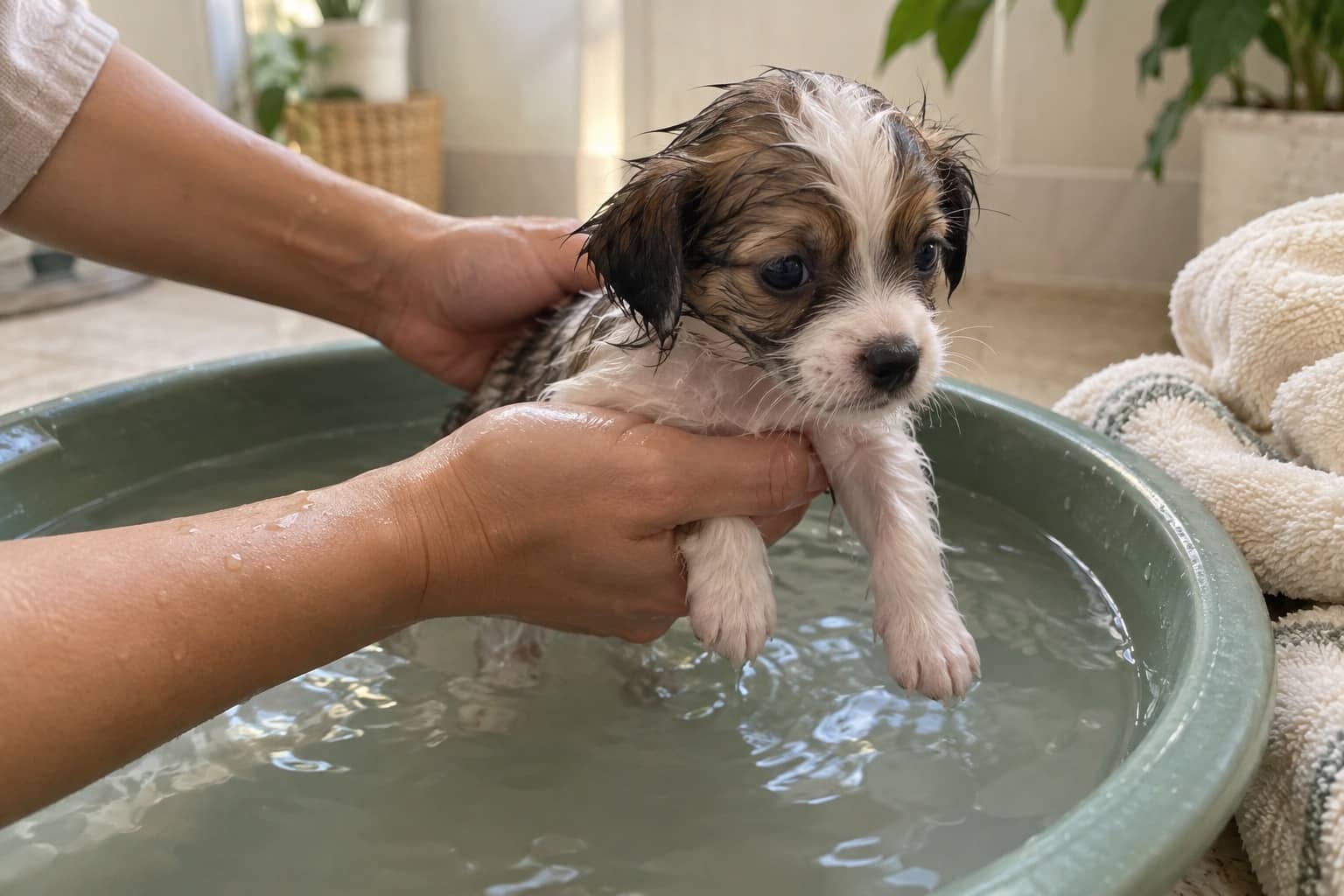
A puppy or kitten is ready for a first bath when the vet says so, because the timing follows his own vaccination schedule. Until then, a warm cloth wrung out almost dry keeps him perfectly clean.
The question behind the question
Nobody types "50-day-old puppy — can he have a bath yet?" at two in the morning because they want a number.
They want to know they aren't about to hurt something that arrived three days ago and weighs less than a bag of rice.
So the number comes first and everything else after. And the number doesn't belong to a shop that sells shampoo — it belongs to the vet who's looking at his vaccination card. Ask at the next appointment. Ten seconds, and the answer fits your animal instead of somebody's average.
Until the day arrives
Small animals are less dirty than you fear. A kitten has his mother. A puppy gets messy in specific places, not all over.
A small towel soaked in warm water and wrung out as dry as you can manage is the entire toolkit. Work one area at a time — face, neck, legs, back end — and follow each one with a dry towel immediately.
Never leave him wet while you move on. A small animal loses heat far faster than a grown one, and that matters more here than being thoroughly clean.
Set the room up before you carry him in
On the day itself, what makes a first bath go well isn't skill. It's preparation.
Put everything within arm's reach before you start — shampoo, a jug, two towels — and shut the bathroom door. If you have to let go of him halfway through to fetch something, that's the moment he'll remember as frightening.
Lay a towel in the bottom of the basin. A slippery surface is the number one reason small animals panic, not the water.
Fill to his belly, no deeper. Warm enough that your wrist says comfortable, never hot.
Four minutes, not twenty
The first bath doesn't need to be thorough. It needs to be short.
Wet him, use shampoo you've already diluted, rinse, done. Under five minutes, if the room was set up first.
Keep your free hand flat on his chest the whole time — not to hold him still, but so he knows someone is still there. A small animal with something to lean on stays far calmer than one floating in the middle of a basin.
Don't pour water over his face. Use a damp cloth instead. The face and the ears are the two places that can teach an animal to hate bath time for life, in a single session.
How puppy shampoo actually differs
"For puppies" on a label isn't a regulated promise. What differs is how gentle the formula is.
A young animal's skin is thinner and more reactive than an adult's. What you're looking for is no strong fragrance, no harsh cleansing agents, and something that rinses out easily — not the words on the front.
Hypoallergenic Shampoo is the mildest-scented of our four, which is deliberate: the people who most need that option are the ones washing something very small or something with reactive skin.
For a first bath, mix the shampoo with water in a cup before it touches him. Diluted lather rinses out far more easily, and shampoo left in the coat is the most common cause of the itching that shows up the day after a bath.
Drying something that small
A dryer is much louder than we think when you're listening from ten centimetres away.
Towel off as much as you possibly can first, then switch the dryer to its lowest warm setting. Let it run at a distance for a moment so he gets used to the noise before the air reaches him.
If he's genuinely frightened, towels alone are fine for the first bath, as long as the room is warm and there's no draught. Introduce the dryer next time.
There's more to say about a coat that doesn't dry through, and it's written up separately.
Why the first one matters more than any other
Because it isn't really about cleaning. It's the first thing he learns about being handled.
An animal whose first bath passed quietly will be easy on the fiftieth. One who thrashed free and got chased round the room will remember the sound of running water for a long time.
When you've dried him, give him something small to eat right there in the bathroom — not once you've left it. The timing matters more than the treat.
The full routine for when he's grown is here.
A first bath nobody would have thought worth mentioning is a first bath that went perfectly.
Questions people ask us
- At how many months can a puppy be bathed?
- There's no single number, because the timing is tied to his vaccination schedule. Ask the vet who gives him his shots at the next appointment — a ten-second question with an answer that fits your puppy rather than an average. Until then, a warm damp cloth is enough.
- At what age can a kitten be bathed?
- Same answer: the vet decides. Kittens need it even less, because the mother cat handles the cleaning. If there's no mother, wipe him with a warm cloth and dry him immediately — small animals lose body heat fast.
- Is puppy shampoo different from adult shampoo?
- What differs is how gentle the formula is, not the word on the bottle. A puppy's or kitten's skin is thinner and more reactive, so a formula mild enough for the small one also works on the adult — but not every adult formula works in reverse.
- He can't be bathed yet — how do I clean him?
- A small towel soaked in warm water and wrung out as dry as you can manage. Work one area at a time — face, neck, legs, back end — and follow each with a dry towel straight away. Go over the mouth and rear twice if they need it. That's clean enough until bath day.
Read next
 How Often Is Often Enough — and Why Dogs and Cats DifferOnce a week suits most dogs in a Thai home. An indoor cat can go far longer, or never. The right number depends on the coat, the weather and where he sleeps — and if the shampoo is gentle, more often does no harm. Red or flaky skin is the one sign to stop and see a vet.
 Human Shampoo on a Dog? Dog Shampoo on a Cat?Human shampoo isn't built for a pet's skin. Once, in a pinch, is not a disaster — but it shouldn't become the habit. Dog shampoo on a cat is the riskier of the two, because a cat licks everything back off himself afterwards and swallows whatever was left in the coat.
 Still Smelly After a Bath: Where the Odour Actually Comes FromA smell that survives a bath usually isn't the shampoo's fault. The most common cause is a coat that never dried down to the skin; the next is shampoo that wasn't fully rinsed out. If it's dry and properly rinsed and the smell is still there, track it to the ears, skin, mouth or rear — and have a vet look.