
How To4 min read
After the Bath: A Five-Minute Coat Care Routine
Drying, brushing, and a quick check with your nose and hands. The part everyone rushes, and the part that decides how the coat looks for the next ten days.
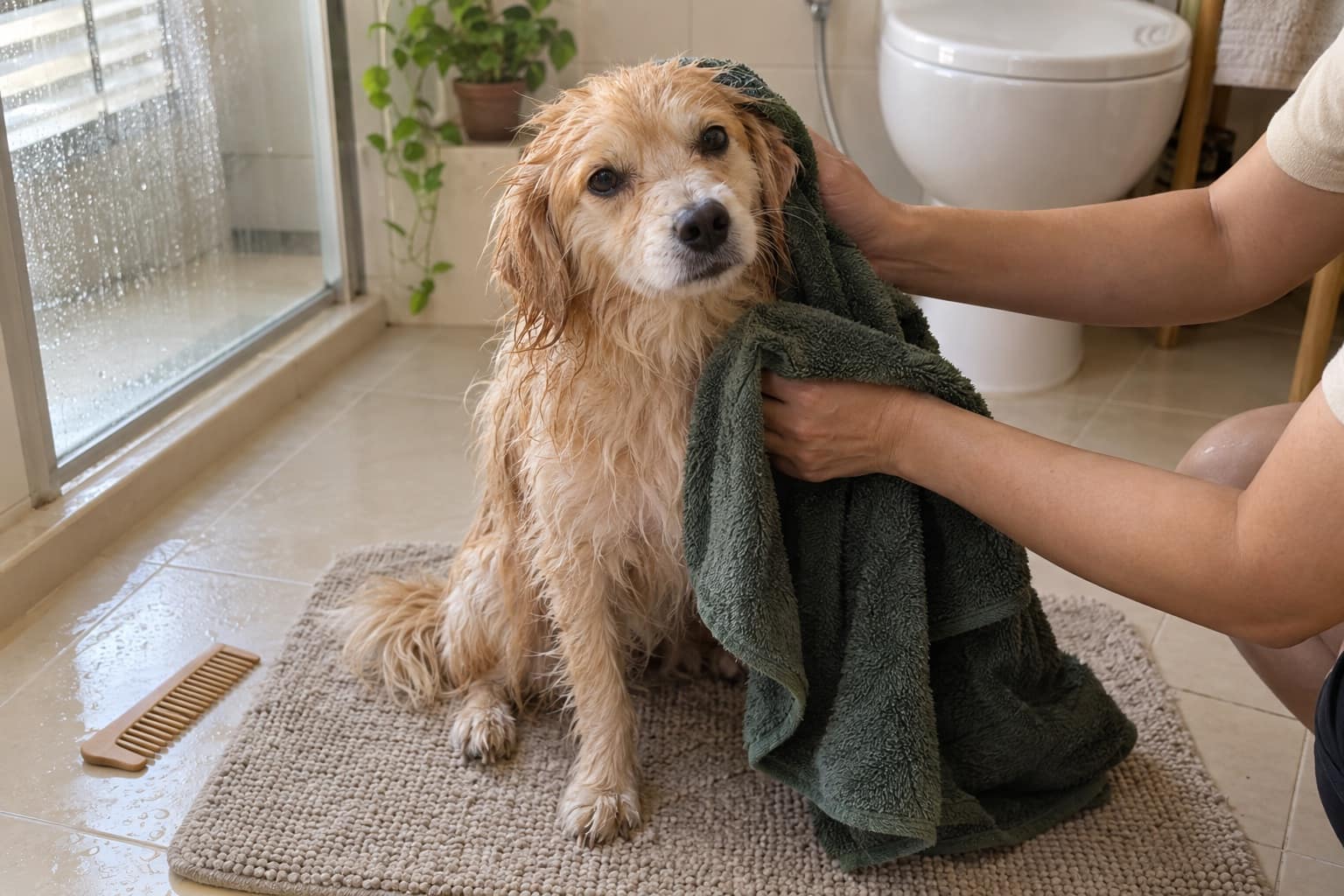
The five minutes after you turn the water off are the five minutes everyone rushes. The bath's done, the bathroom's soaked, and the temptation is to let the dog go and deal with it later.
But if you want to know what makes a coat still look good ten days from now, it isn't the shampoo. It's this.
Minutes 1–2: get as much water out as the towel will take
Press and blot. Don't rub. Rubbing tangles the coat, especially a long one, and especially while it's still soaked.
Swap towels once the first is saturated. Most people use one towel until the dog is merely damp and stop there, when a second towel would still pull out a surprising amount.
The spots everyone forgets are the belly, the armpits and between the toes. Those are the slowest to dry and the source of nearly every musty smell.
Minute 3: dry to the skin if the coat is thick
Warm air on low, about a hand's width away, and keep the dryer moving. Never hold it in one place.
For a double coat, part the fur with your free hand and dry down at the skin rather than over the surface. The outer coat dries fast enough to convince you you're finished while the undercoat is still wet.
No dryer, or a dog frightened of the noise? Two more rounds with dry towels, then brush until the hairs separate. Just don't let him curl up and sleep while he's damp.
Minute 4: brush while it's still slightly damp
Damp is the moment. Not soaking, not bone dry.
Go once with the lie of the coat, then lightly against it, which lifts the undercoat and lets it finish drying.
If you hit a knot, don't pull at the root. Hold the hair above the knot with your other hand and work it loose from the tip inwards. Nothing hurts and nothing needs cutting.
Don't forget the ears
Take the cotton out and dry the inside of the ear flap with the corner of a towel. Don't push anything down into the canal — just the part you can see.
Floppy-eared dogs need this more than anyone. The flap sits closed over a warm, damp opening, and that combination is behind a lot of the ear trouble that shows up a week after a bath. Lift the flap and hold it open for a minute while the rest of him dries.
Minute 5: smell him and feel him
It sounds odd. It's the most useful minute of your week.
Smell the back of his neck, his ears and around his mouth. Learn what he smells like clean, because next week, if something has changed, you'll know immediately. Owners who catch an ear problem early almost always catch it by smell rather than by looking.
Then run your hands over him now that he's dry — lumps, scabs, any spot that makes him flinch. A dry, freshly brushed coat is by far the easiest state in which to feel them.
And between baths
Most dogs go 2 to 4 weeks between baths. In between, two things do the work: combing regularly, and spot-cleaning with a dry shampoo foam. Paws, belly, around the mouth — that's where the smell always comes back first.
A 150 ml foam at ฿490 tends to last one to three months used that way. A 500 ml shampoo at ฿890 typically covers three to five months for a medium dog.
If you want the whole bath from the start, the full walkthrough is here.
And if you've towelled and dried and the smell is still there, it usually isn't the shampoo. If you're worried about what a not-quite-dry coat does, that's answered here.
Questions people ask us
- Can I just let the coat air-dry?
- A short coat in a warm, draught-free room is fine. A thick or double coat isn't — moisture sitting against the skin is what causes the musty smell and the irritation that follows.
- Should I brush the coat wet or dry?
- Slightly damp is the sweet spot. Soaking wet hair breaks more easily, and a fully dry coat has already set any knots that formed.
- Why does he still smell right after a bath?
- Most often the coat isn't dry down to the skin. Second most often, shampoo wasn't fully rinsed out. If it's dry and properly rinsed and the smell persists, track down the source — mouth, ears or skin — and get it looked at.
- How often should I comb between baths?
- Long coats every day or every other day; short coats two or three times a week. Consistency matters more than how long you spend.
Read next
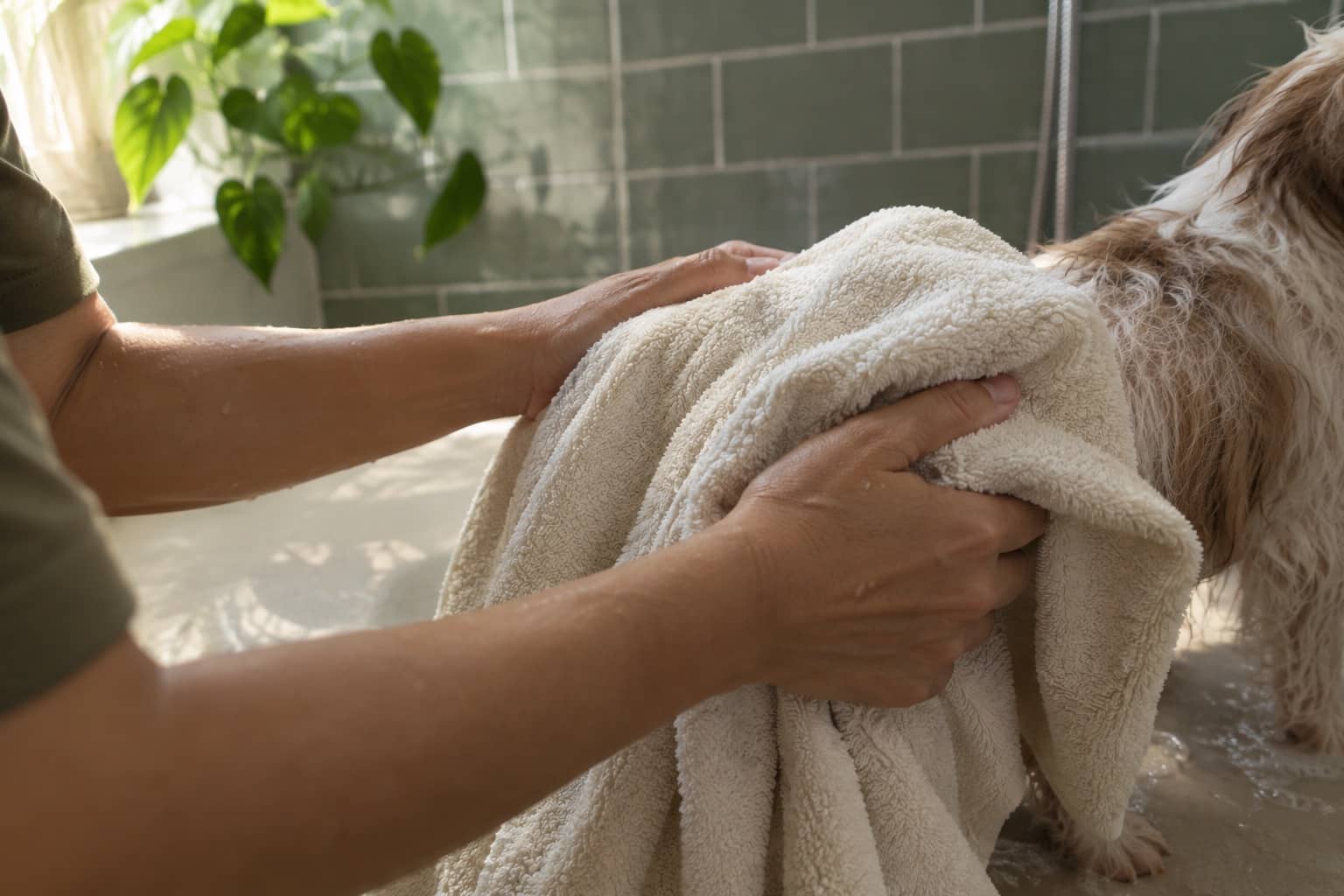 How Often Is Often Enough — and Why Dogs and Cats DifferOnce a week suits most dogs in a Thai home. An indoor cat can go far longer, or never. The right number depends on the coat, the weather and where he sleeps — and if the shampoo is gentle, more often does no harm. Red or flaky skin is the one sign to stop and see a vet.
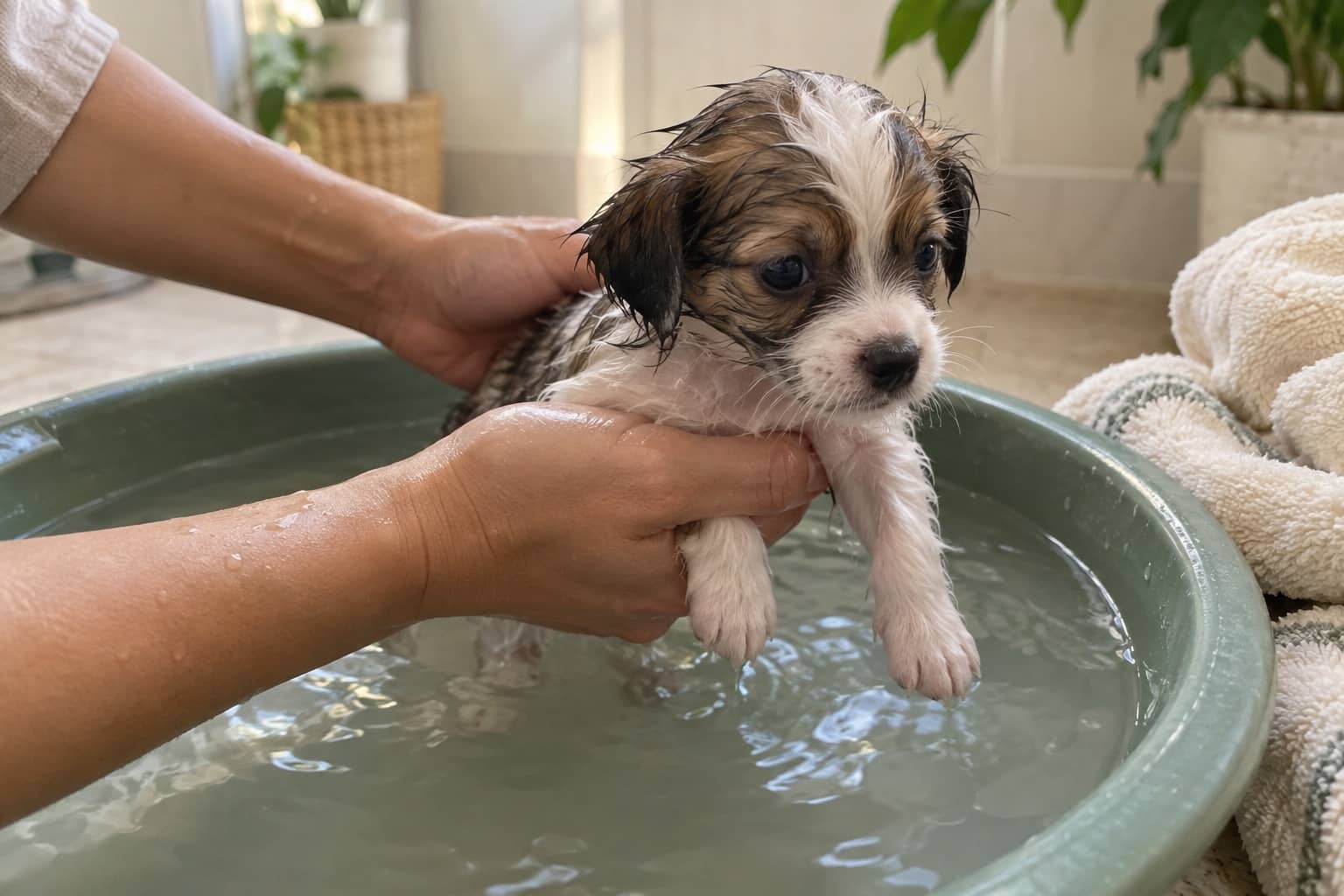 The First Bath: When, and How to Make It UneventfulA puppy or kitten is ready for a first bath when the vet says so, because the timing follows his own vaccination schedule. Until then, a warm cloth wrung out almost dry keeps him perfectly clean.
 Human Shampoo on a Dog? Dog Shampoo on a Cat?Human shampoo isn't built for a pet's skin. Once, in a pinch, is not a disaster — but it shouldn't become the habit. Dog shampoo on a cat is the riskier of the two, because a cat licks everything back off himself afterwards and swallows whatever was left in the coat.