
How To7 min read
How to Bathe Your Dog at Home (Without the Drama)
Water temperature, what to wash first, and what to do when he starts to struggle. A bath at home takes twenty minutes once you stop improvising.
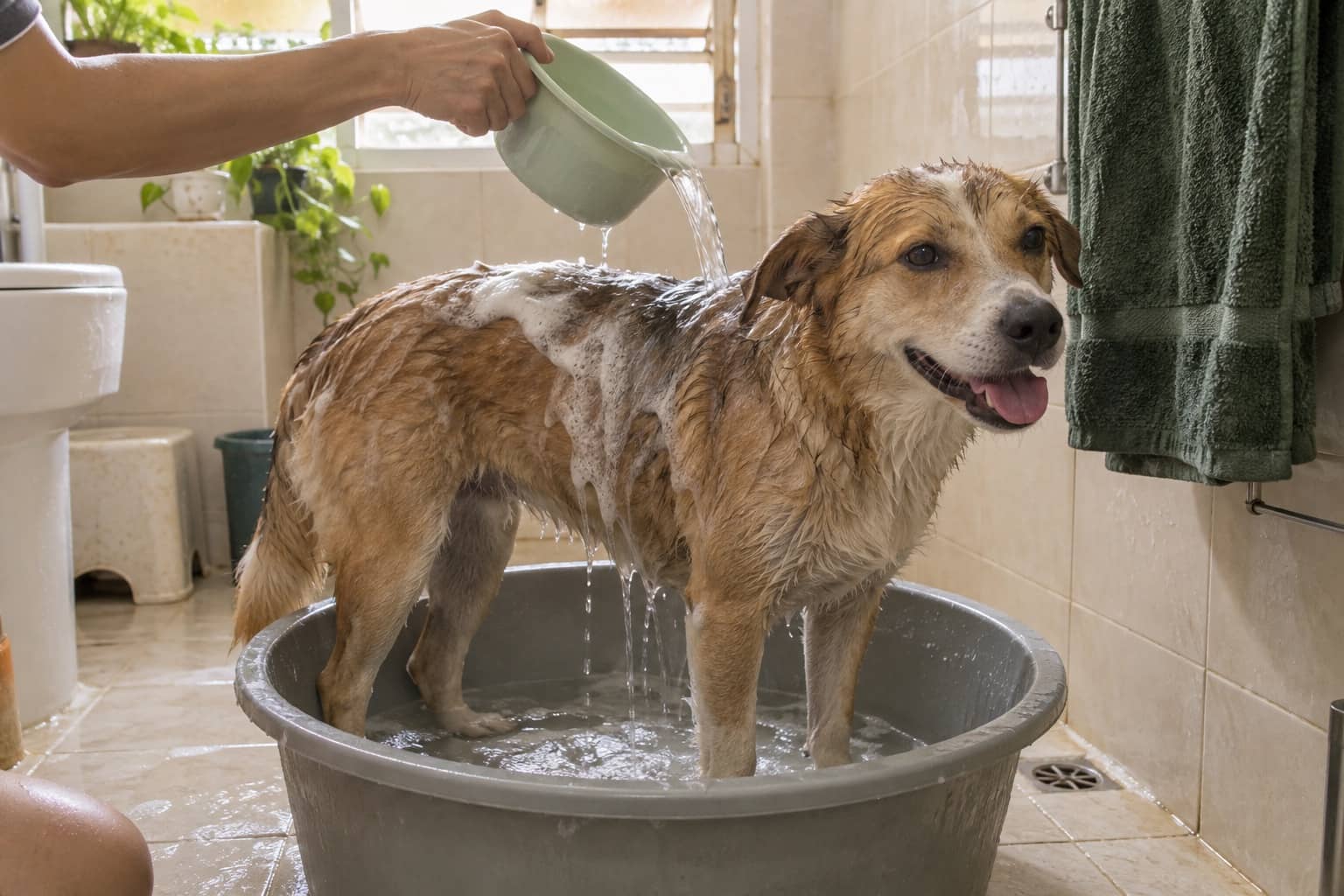
People who take their dog to the groomer every time usually give the same reason: doing it at home makes a mess. That's true, but the mess isn't the bath. The mess is starting before you've laid anything out, then walking across the house for a towel with a wet dog loose behind you.
Set up properly first and the whole thing takes twenty minutes. Your dog will also hate it considerably less.
What to have ready before the water goes on
Everything within arm's reach, before the dog comes into the room.
- Three towels. One on the floor for grip, one for drying, one spare.
- Shampoo, cap already open. Squeezing a bottle with wet hands is harder than you think.
- Two cotton balls to sit loosely in his ears.
- Four or five treats.
- A rubber mat or a towel in the tub. This one matters most — a slippery surface is the single biggest reason dogs come to dread baths.
Getting the water right
Test it on the inside of your wrist. If you barely register it, it's right. If it feels nice and warm to you, it's too hot for him.
Pressure matters as much as temperature. A hard spray pointed at a dog startles him. Turn it down and hold the shower head flat against his body, so the water runs down through the coat instead of bouncing up into his face.
Where to start washing
Start at the neck, work back to the tail, then down the legs, and do the paws last. Leave the face out of it entirely.
The head and face are the most sensitive area he has. Start there and he spends the whole bath trying to leave. Start at the shoulders and work back and he has time to settle.
Paws go last because they're the dirtiest and take longest, and by then he's already wet and resigned to it.
For the face, skip the shower entirely. A damp cloth around the mouth and under the eyes does the job.
Rinsing matters more than lathering
Shampoo left in the coat is the most common cause of post-bath itching we hear about. People lather for a long time and rinse quickly. It should be the other way round.
The check is simple: run two fingers down through the coat. If it still feels slippery, keep rinsing. Pay attention to the armpits, the belly and the ruff around the neck, which are the spots everyone forgets.
Our shampoos are SLS-free, so they foam less than you may be used to. Don't take that as a signal to pour more in — foam isn't what does the cleaning. A 500 ml bottle typically lasts a medium dog three to five months at a sensible dose.
When he starts struggling
Stop. Don't hold him down harder.
Put a flat hand on his shoulder or chest and leave it there for thirty seconds. Don't talk much, and don't reassure him in a high voice — a high voice winds him up further. A still hand and a low tone.
When he stops bracing, carry on. If he struggles a second time, rinse the shampoo out and end the bath there. A half-finished bath is better than teaching him the bathroom is where he gets overpowered.
After the bath, don't let him bolt
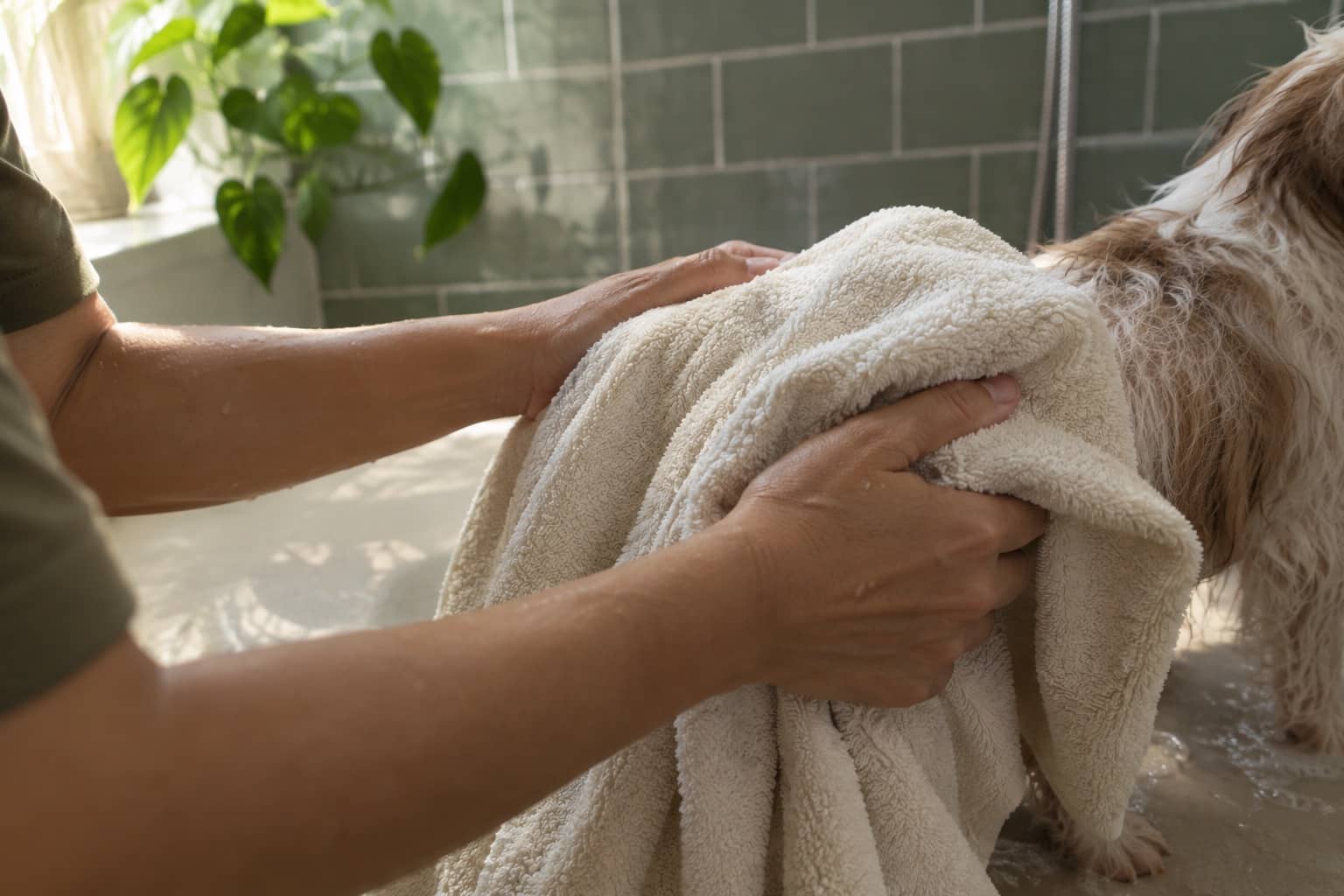
Dry by pressing and blotting, not rubbing. Rubbing tangles the coat, especially a long one.
If you have a dryer, use warm air on low, held about a hand's width away, and brush as you go. Double coats — pomeranians, huskies and the like — need drying right down to the skin, or the damp sits underneath and turns musty within a couple of days.
No dryer is fine. Use several dry towels in turn and brush until the hairs separate. Just don't let him curl up and sleep while he's still damp.
We've written the five minutes after the bath up separately — that one's here. And if you're unsure which formula suits his coat, start with the shampoo guide.
Questions people ask us
- How often should I bathe my dog?
- Every 2 to 4 weeks suits most dogs, depending on coat type and how much time they spend outside. A dog who runs in the park daily needs it more often than one who lives in air conditioning.
- How warm should the water be?
- Run it over the inside of your wrist. If it feels like nothing, it's right. If it feels pleasantly warm to you, it's too hot for him — and hot water dries his skin and teaches him to dread the bathroom.
- Can I use human shampoo in a pinch?
- Better not to. Dog skin sits at a different pH than ours, so human shampoo tends to leave them dry and itchy. If you've run out, rinse with plain water and do a proper bath when you've restocked.
- Do I have to blow-dry him?
- For thick or double coats, yes. Damp fur sitting against the skin is what causes that musty smell and irritation a few days later. Without a dryer, towel him through several changes of towel and brush until the coat separates.
Read next
 How Often Is Often Enough — and Why Dogs and Cats DifferOnce a week suits most dogs in a Thai home. An indoor cat can go far longer, or never. The right number depends on the coat, the weather and where he sleeps — and if the shampoo is gentle, more often does no harm. Red or flaky skin is the one sign to stop and see a vet.
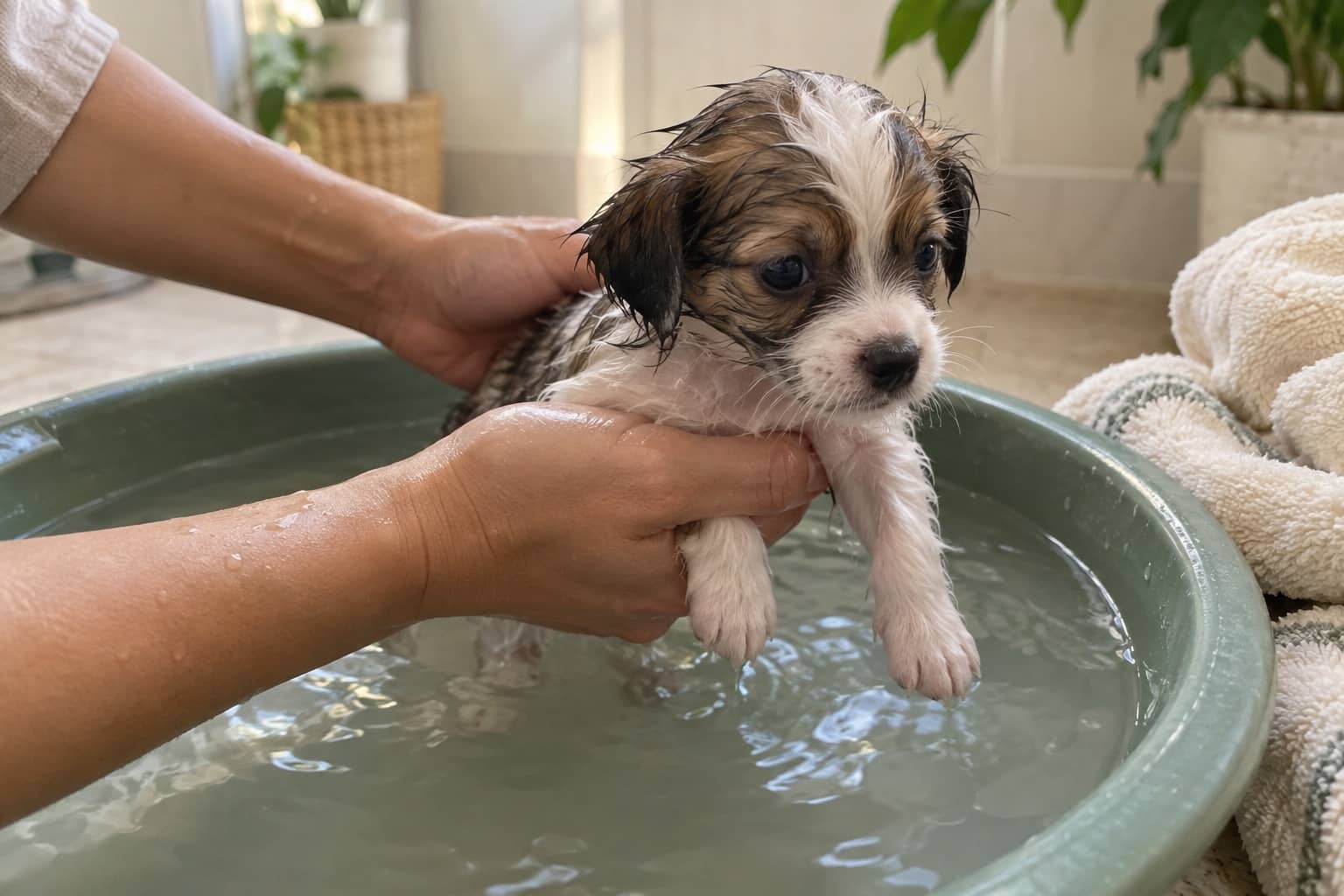 The First Bath: When, and How to Make It UneventfulA puppy or kitten is ready for a first bath when the vet says so, because the timing follows his own vaccination schedule. Until then, a warm cloth wrung out almost dry keeps him perfectly clean.
 Human Shampoo on a Dog? Dog Shampoo on a Cat?Human shampoo isn't built for a pet's skin. Once, in a pinch, is not a disaster — but it shouldn't become the habit. Dog shampoo on a cat is the riskier of the two, because a cat licks everything back off himself afterwards and swallows whatever was left in the coat.