
Product Guide6 min read
Which Shampoo Is Right for Your Pet's Coat?
Short hair, double coat, sensitive skin — the formula matters more than the brand. What each coat actually needs, and how to read past the label.
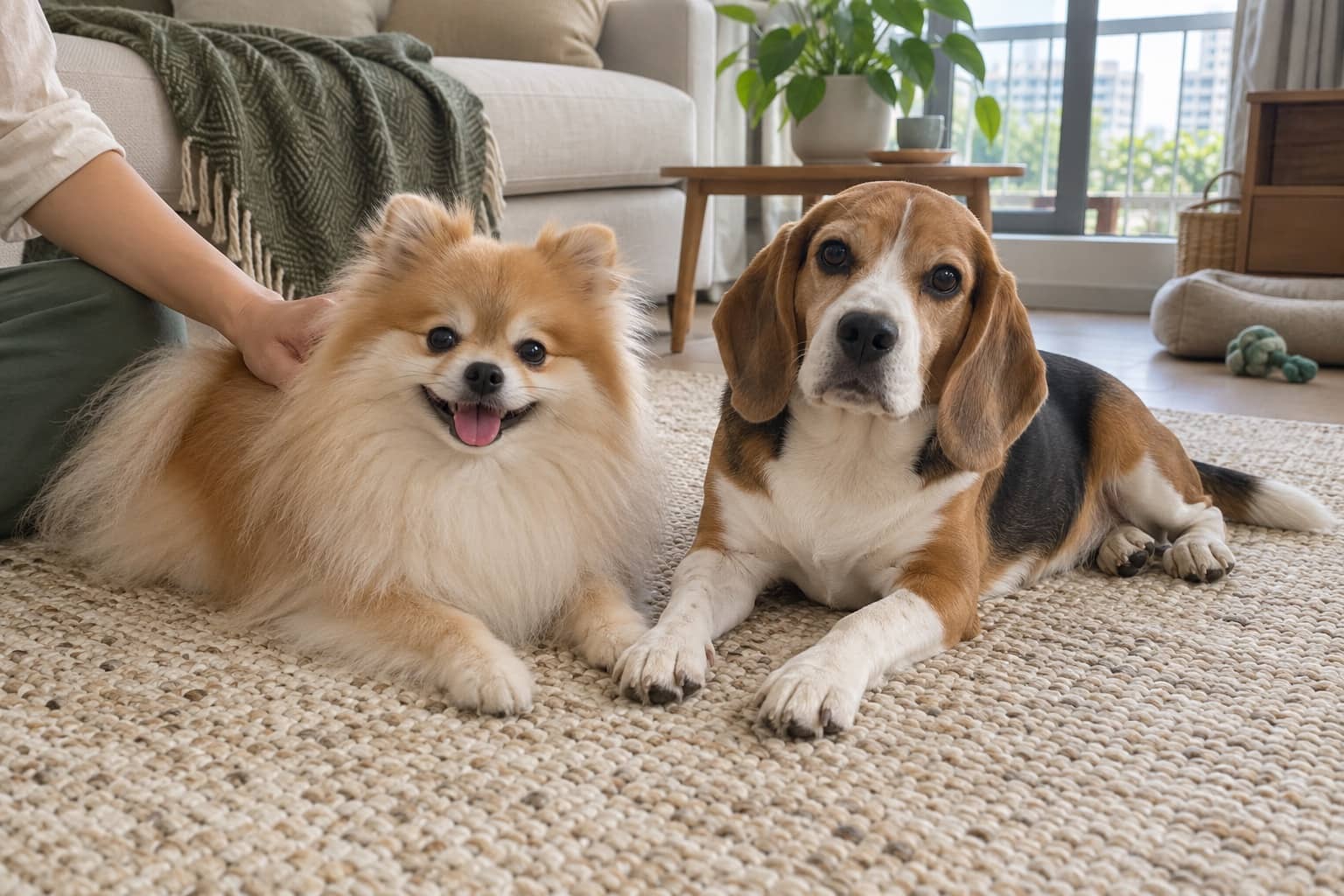
When someone asks us which shampoo is best, the honest answer is that there isn't one. There's the one that suits your pet's coat and skin, and there are the others.
The trouble is that most labels aren't written to be read. They're written to be bought. So this splits in two: what each coat type actually needs, and which words on a bottle mean nothing.
Short coats that get oily
Beagles, pugs, Thai ridgebacks. Easiest dogs in the world to bathe, and usually the first to smell again, because their skin produces oil quickly.
What they need is a formula that cleans without stripping. Use something too harsh and the skin compensates by producing more oil, and the smell comes back faster than before. Plenty of owners are stuck in that loop without realising it's the shampoo causing it.
For this group we'd point you at the Green Tea formula — clean and not heavy.
Long coats that tangle
Shih tzus, malteses, yorkies. The problem here isn't dirt, it's matting.
What helps is anything that leaves the hair slipping past itself so a comb can move through. Our formulas use silk protein alongside oat and rice extracts, which keeps the coat from feeling rough after drying.
Just as important as the shampoo: brush the tangles out before the bath, not after. Water pulls existing knots tighter, sometimes tight enough that the only way out is scissors.
Double coats
Pomeranians, huskies, shibas. This group is different because the fix isn't in the bottle at all — it's in how you rinse and dry.
The outer coat sheds water remarkably well, which fools people into thinking they've rinsed when there's still shampoo sitting underneath. Part the coat and put the water on the skin, not over the top of the fur.
Then dry it all the way down. A double coat that's still damp at the base is where that musty smell comes from, and the shampoo usually gets blamed for it.
Sensitive skin
If your pet scratches a lot, has flaky patches, or goes red after every bath, reduce the number of variables. Move to the mildest, least fragranced formula you can find.
Our hypoallergenic option, Scent of Gentle Babies, is built on oat and rice extracts, turmeric and a blend of natural amino acids, and exists specifically for this group.
But plainly: if your pet is losing fur in patches or scratching until she breaks the skin, shampoo isn't the answer. That's a vet visit.
Label words worth ignoring
"100% organic" with no mention of what's organic. Any shampoo that actually cleans contains cleansing agents, so a round number like that usually refers to one part of the formula. Ours states what it means: 99% natural origin ingredients.
"Extra gentle." No definition, no standard. Read the ingredient list instead.
"Treats itching." A general pet shampoo isn't medicine. A label that talks like medicine is a reason to be careful.
Label words worth looking for
pH-balanced for pets. Dog and cat skin sits at a different pH than ours. A shampoo not adjusted for it will dry them out.
SLS-free. SLS makes big foam and is harder to rinse out. An SLS-free formula lathers less, which is normal and not a downgrade.
A named ingredient list. If a bottle tells you only what it smells like, that tells you something.
Then choose the scent
Once the formula suits the skin, the scent is entirely between you and your pet. We make four, all at ฿890 for a 500 ml bottle. Most people buy the first bottle on scent and the second on what their pet's skin did.
All four are here, and if you're still not sure which one fits, just ask us.
And if he's scratching right now and you're reaching for a different bottle, it's worth reading what a shampoo can and can't do first.
Questions people ask us
- Can one bottle work for both my dog and my cat?
- Ours can — they're pH-balanced for pet skin generally and safe for dogs, cats and exotic pets. With other brands, check the label first. Some dog-specific formulas aren't suitable for cats.
- Does a double coat need a special formula?
- No. What changes is technique, not formula. Double coats need rinsing right down to the skin and drying all the way through, or moisture stays trapped underneath.
- What should I use on sensitive skin?
- The gentlest, least fragranced formula you can find. Ours is the hypoallergenic Scent of Gentle Babies, built on oat and rice extracts, turmeric and natural amino acids. If your pet is scratching until she bleeds, see a vet before you change shampoos.
- Should I rotate shampoos?
- There's no need. If the skin stays comfortable and the coat looks good, stay with what works. Switching often makes it impossible to tell what suited her in the first place.
- Which dog shampoo smells good?
- Scent is preference, and none of them is more correct than another. We make four, all deliberately kept light. Green Tea is clean and green, not sweet. Chamomile is softer and warmer, faintly floral. Solar is brighter and airier than either. Hypoallergenic is the quietest of the four, for people who want clean and nothing else. A strong scent doesn't mean a cleaner pet — and a light one leaves you able to notice when his own smell changes.
- How do I choose a shampoo by my pet's age?
- What actually changes with age is how gentle the formula needs to be, not a number on a bottle. Young animals have thinner, more reactive skin, so pick the lightest-scented formula that rinses out most easily. A healthy adult can use any of them. An older pet tends towards drier skin, and usually suits a slightly longer gap between baths plus a gentle formula.
Read next
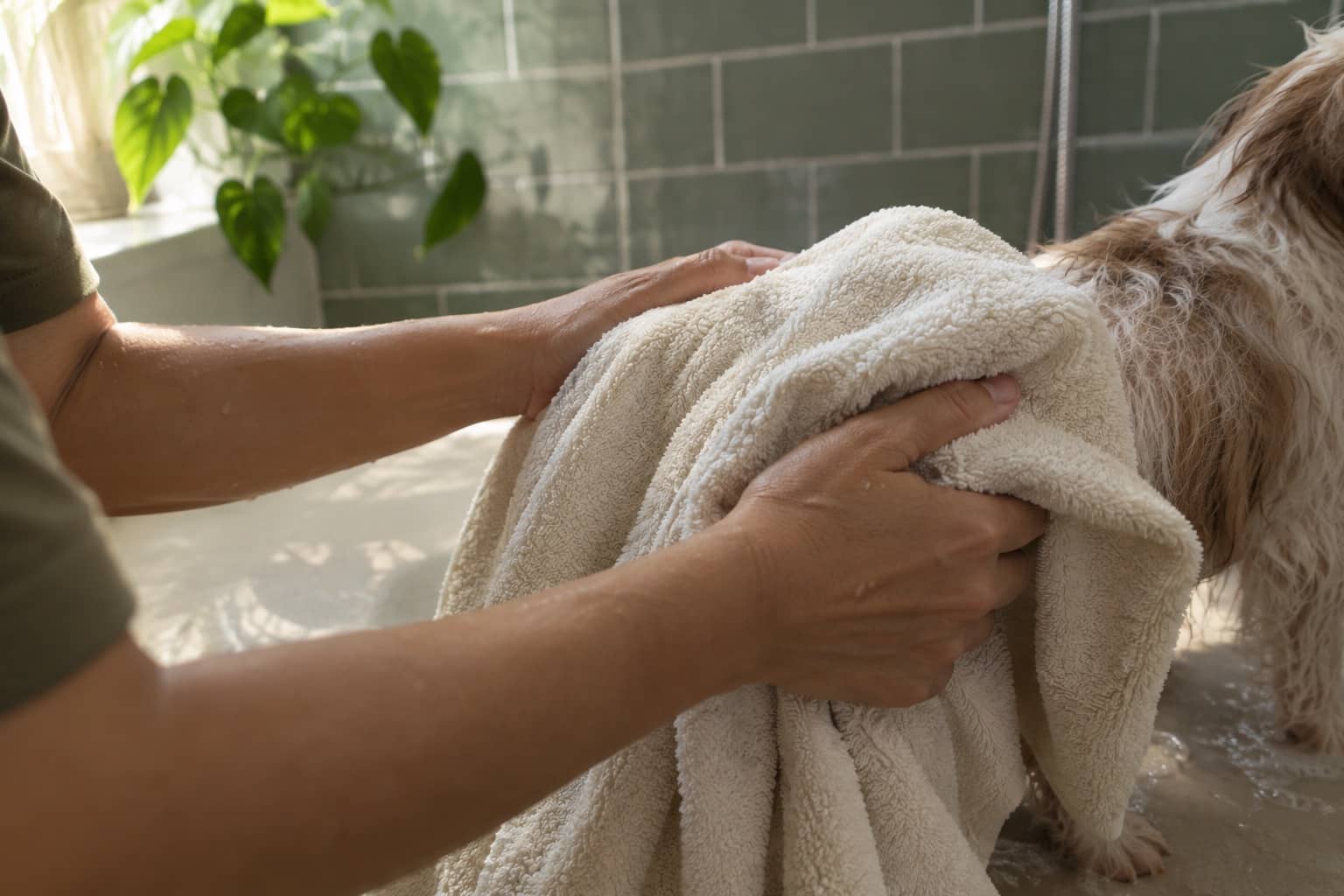 How Often Is Often Enough — and Why Dogs and Cats DifferOnce a week suits most dogs in a Thai home. An indoor cat can go far longer, or never. The right number depends on the coat, the weather and where he sleeps — and if the shampoo is gentle, more often does no harm. Red or flaky skin is the one sign to stop and see a vet.
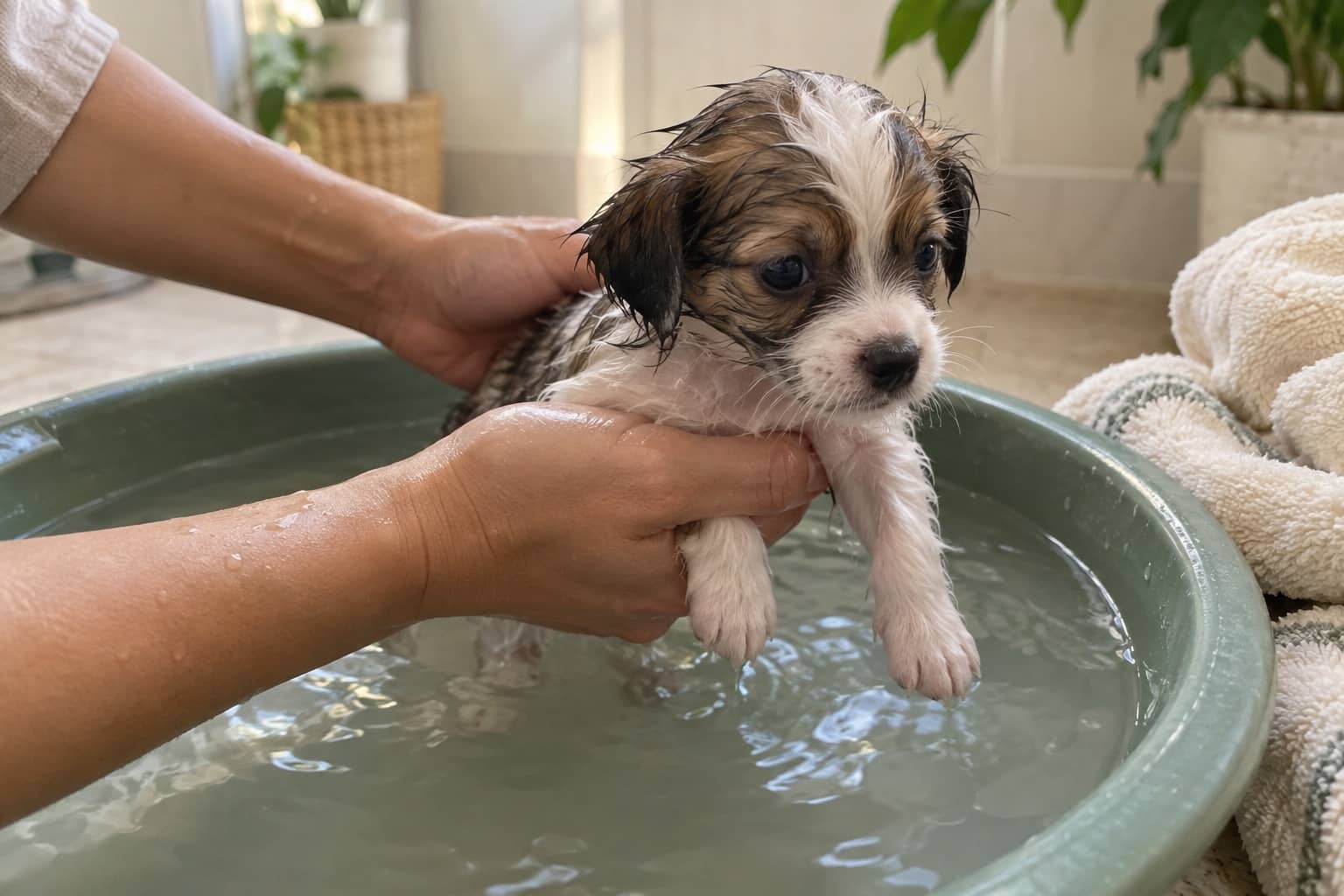 The First Bath: When, and How to Make It UneventfulA puppy or kitten is ready for a first bath when the vet says so, because the timing follows his own vaccination schedule. Until then, a warm cloth wrung out almost dry keeps him perfectly clean.
 Human Shampoo on a Dog? Dog Shampoo on a Cat?Human shampoo isn't built for a pet's skin. Once, in a pinch, is not a disaster — but it shouldn't become the habit. Dog shampoo on a cat is the riskier of the two, because a cat licks everything back off himself afterwards and swallows whatever was left in the coat.