
How To5 min read
Dry Shampoo Foam: How to Use It, and Where It Stops
Pump a handful of foam into your palm, work it into the coat against the lie of the hair, towel it through and brush it out. No rinsing. It's made for the weeks between baths, for cats who won't go near water, and for one dirty patch — not for a pet who needs a real bath.
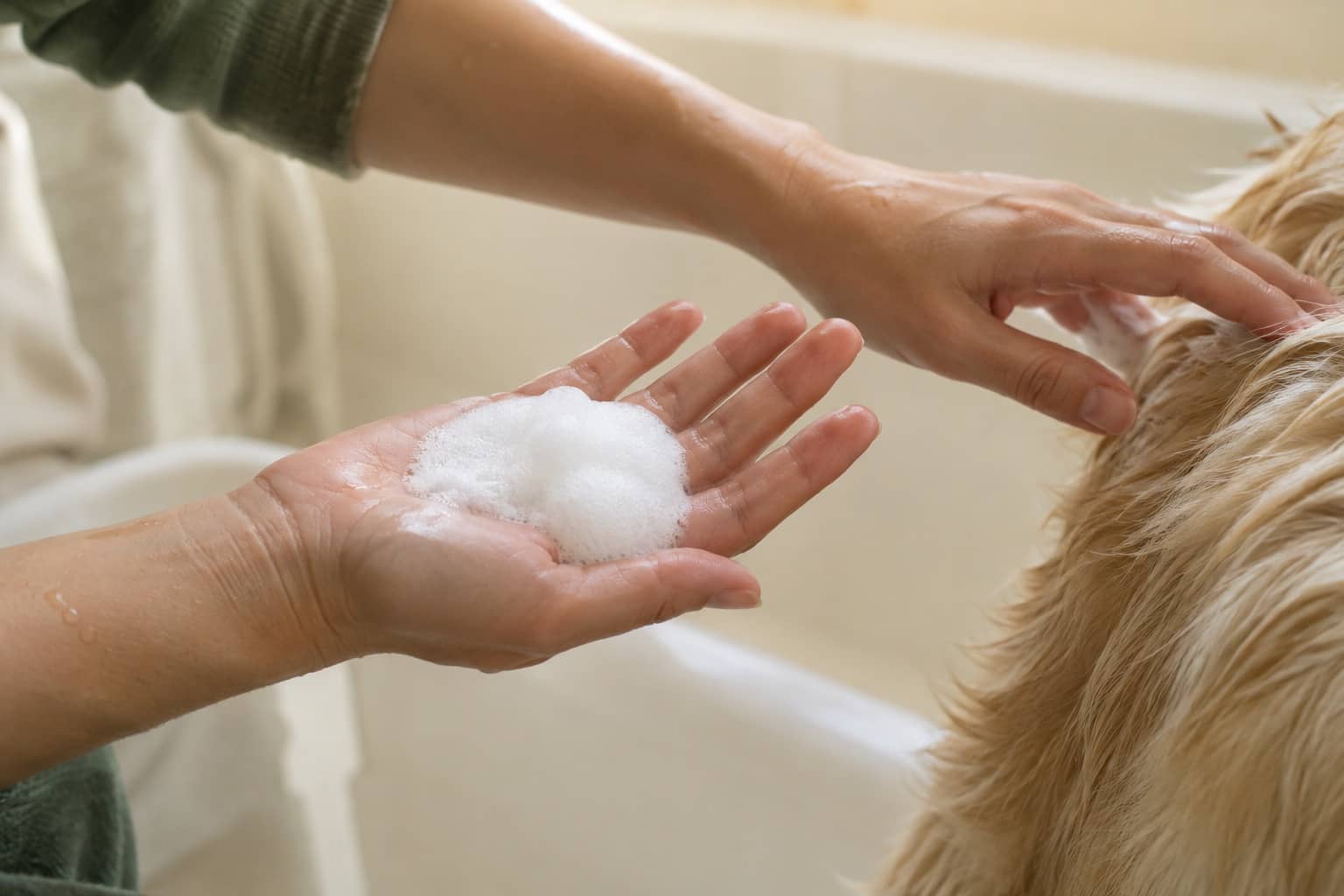
Pump a handful of foam into your palm, work it into the coat against the lie of the hair, towel it through and brush it out. No rinsing. It's made for the weeks between baths, for cats who won't go near water, and for one dirty patch — not for a pet who needs a real bath.
Four minutes, step by step
You need two things to hand before you start: a dry towel and a brush.
Shake the bottle, then pump about a handful into your palm. No more than that. Most people overdo it the first time and spend the next ten minutes towelling.
Work it into the coat against the lie of the hair. Your fingertips should feel skin, not just glide over the surface of the coat. Do it in sections — neck, back, legs — and finish one before moving on. Sweeping over the whole animal in one go doesn't reach anything.
Towel it through immediately. This is the step people skip, and it's the step that actually lifts the dirt out.
Brush until the hairs separate. A finished coat visibly lifts, and that's your signal to stop.
No rinsing. No drying.
How clean does it actually get him?
Honestly: three things. Dust sitting on the coat, the light greasy film that makes hair lie flat and clumped, and a smell in one particular place.
What it doesn't touch is mud, sand, and anything properly worked into the coat.
A dog fresh out of a canal is not a job for foam. That's a job for a bucket.
So can it replace a bath?
Occasionally. Not permanently.
Foam is what you use in the week you genuinely don't have thirty minutes. On the day it rains from morning to night. On the evening you get home late and he climbs onto the bed with his paws still filthy.
Used all over, every day, in place of bathing, dust and residue accumulate at the roots and you'll end up needing the real thing anyway.
The three spots worth the effort are the paws, the belly and around the mouth, because that's where the smell always comes back first.
The cat case, which is who is really searching
People who search "bathing a cat without water" aren't looking for a shortcut. They're looking for a way that doesn't involve fighting a cat.
Plenty of cats go their whole lives without getting wet, and they don't need to start. A cat grooms himself clean already. Foam fills in what his tongue can't reach — a greasy tail base, the back of an older cat, or something he got into that won't lick off.
Two extra rules with cats. Use a small amount, and towel it out properly. He'll groom himself afterwards, so whatever stays in the coat goes into his mouth.
The 150 ml foam at ฿490 is made to lift out easily and to smell light. That's a decision made with cats in mind more than dogs.
If one day you do want to try actual water, the gentle way into cat bathing starts here.
How long does a bottle last?
Used on specific spots two or three times a week, a 150 ml bottle usually runs one to three months.
If yours empties much faster, you're pumping too much each time. Halve it and towel more. The result is usually better, not worse.
Foam doesn't replace anything. It fills a gap.
Finding the right bathing rhythm is its own question, and it's answered here. Foam is what lives in between.
A week too busy for a bath isn't a failure. Four minutes and a towel is enough to make him good company on the sofa again.
Questions people ask us
- How do you use dry shampoo?
- Pump roughly a handful of foam into your palm, then work it into the coat against the lie of the hair so your fingertips reach the skin. Do one section at a time rather than sweeping over the whole animal. Towel it through with a dry cloth, brush until the hairs separate, and stop. No rinsing. About four minutes in total.
- Can dry shampoo foam replace a bath?
- Occasionally, not permanently. Foam handles dust, a light greasy film and a localised smell. A pet who is dirty all over, or who has been in dirty water, needs a real bath. Think of foam as what you do in the week you genuinely don't have thirty minutes.
- Can I use dry shampoo foam on a cat?
- Yes, and cats get the most out of it. A cat who has never been in water doesn't need to start. Two rules for cats: use a small amount, and towel it out thoroughly — he'll lick himself afterwards, so whatever stays in the coat ends up in his mouth.
- How often can I use it?
- As often as you like on a specific spot. Two or three times a week on paws or around the mouth is no problem. What doesn't work is using it all over, every day, instead of bathing — dust and residue build up at the roots and you end up needing a real bath anyway.
Read next
 How Often Is Often Enough — and Why Dogs and Cats DifferOnce a week suits most dogs in a Thai home. An indoor cat can go far longer, or never. The right number depends on the coat, the weather and where he sleeps — and if the shampoo is gentle, more often does no harm. Red or flaky skin is the one sign to stop and see a vet.
 The First Bath: When, and How to Make It UneventfulA puppy or kitten is ready for a first bath when the vet says so, because the timing follows his own vaccination schedule. Until then, a warm cloth wrung out almost dry keeps him perfectly clean.
 Human Shampoo on a Dog? Dog Shampoo on a Cat?Human shampoo isn't built for a pet's skin. Once, in a pinch, is not a disaster — but it shouldn't become the habit. Dog shampoo on a cat is the riskier of the two, because a cat licks everything back off himself afterwards and swallows whatever was left in the coat.